Monetization & Paywall
Subscriptions, one-off packs and paywall timing on a QR product
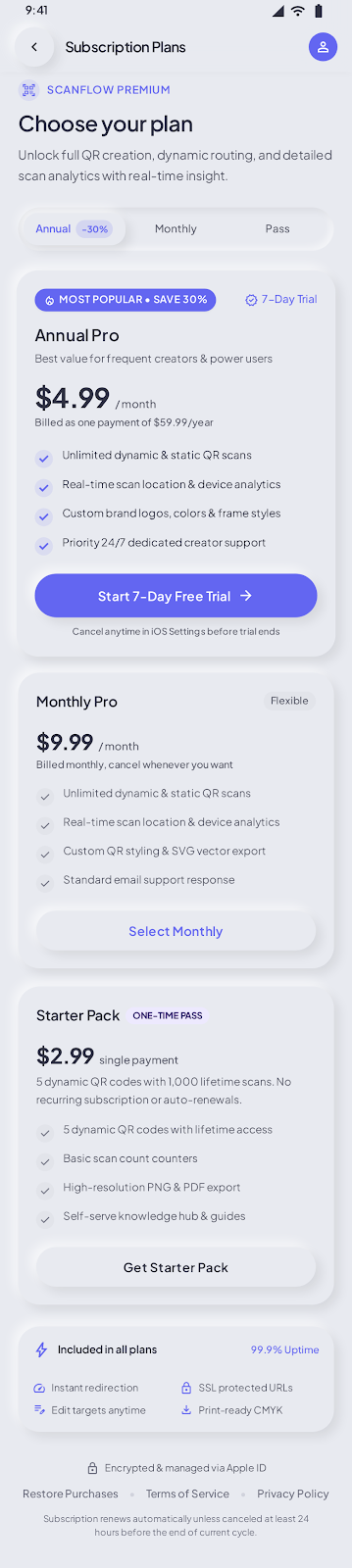
One-off packs next to subscriptions gave people with occasional needs a way to buy.
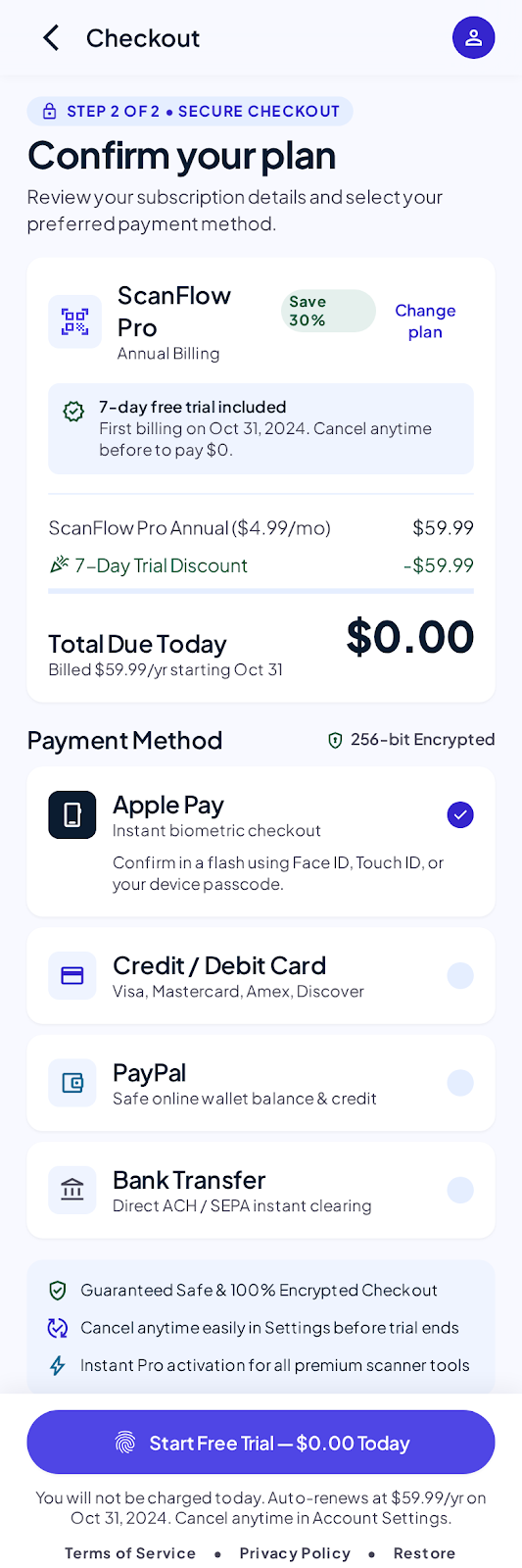
A clearer plan comparison, local payment methods (APMs) and a simpler information hierarchy.
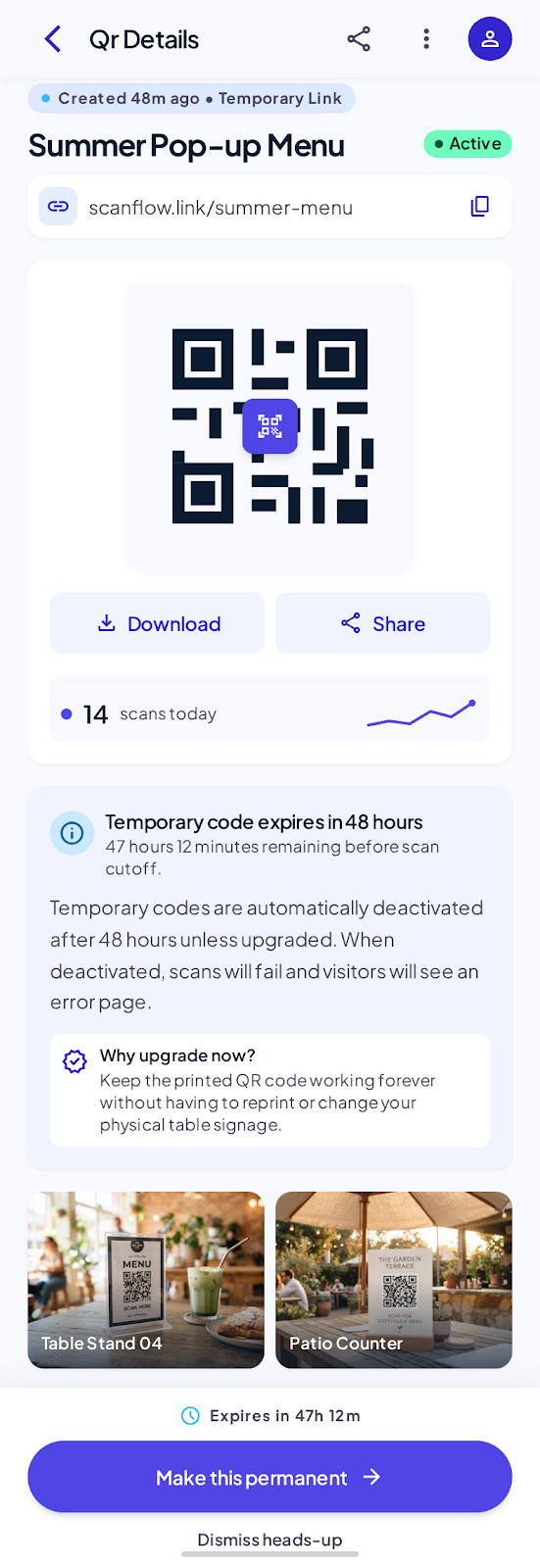
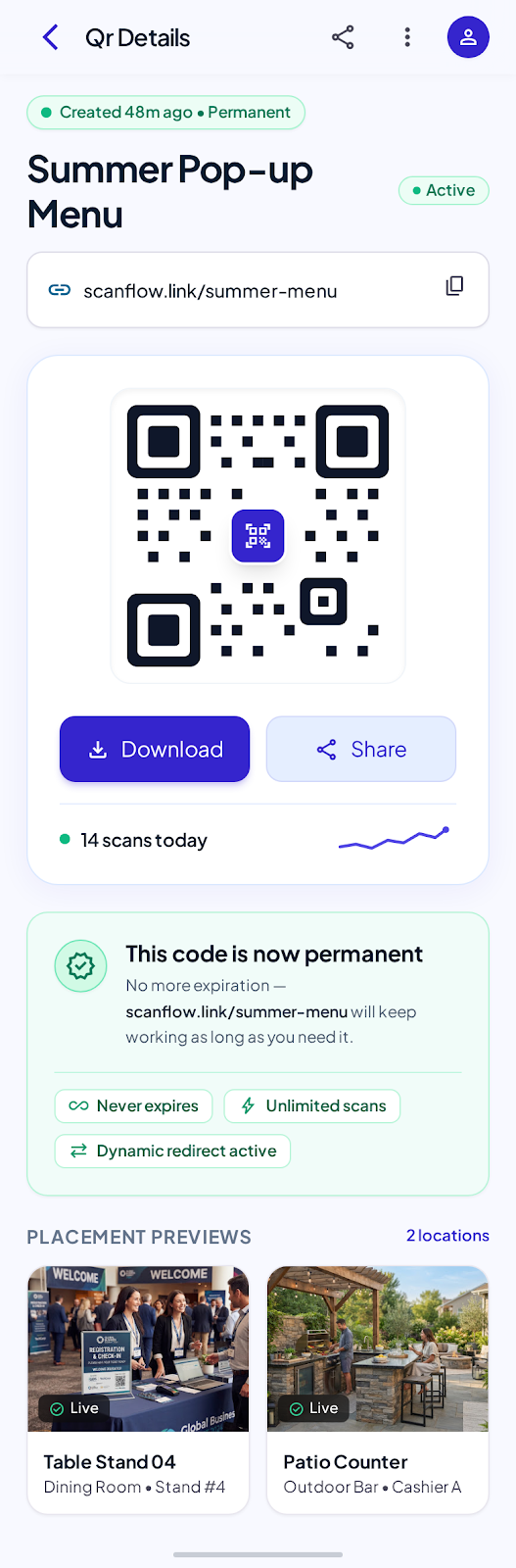
The first QR code used to expire after 48 hours. Making it permanent increased recurring use and later upgrades.
Clearer communication of plan benefits on the selection screen.
The problem
Conversion depended on more than a well-built checkout. We needed to know which value proposition and which monetization model made different users willing to pay, and where people dropped off along the payment journey. That included when to show the paywall and how much value to show before it.
What I did
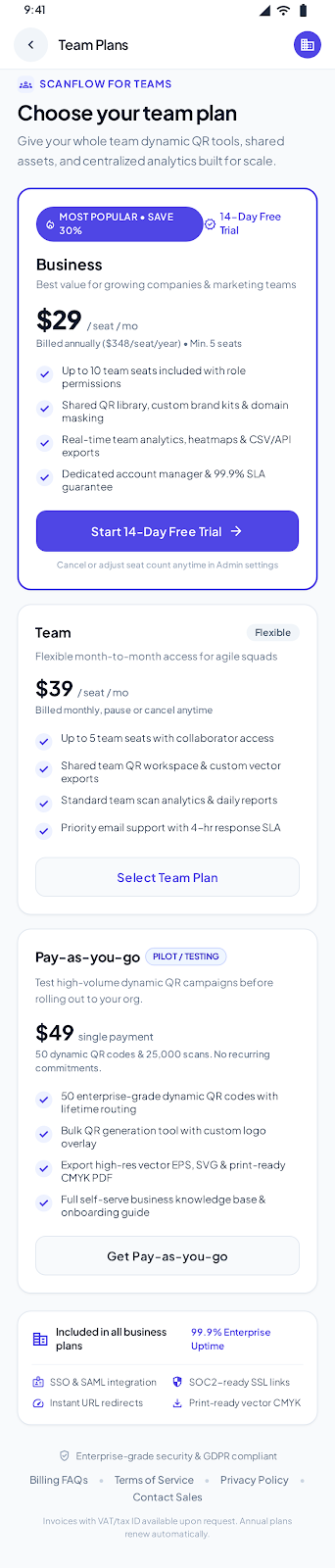
I worked end to end with Product and Data: problem definition, competitive research, UX/UI, prototyping, experimentation and measurement. We tested subscription plans against one-off QR packs, trial mechanics, paywall timing, monthly vs. annual plans, promotions, payment methods, checkout structure, and separate B2C and B2B value propositions.
From paywall to value
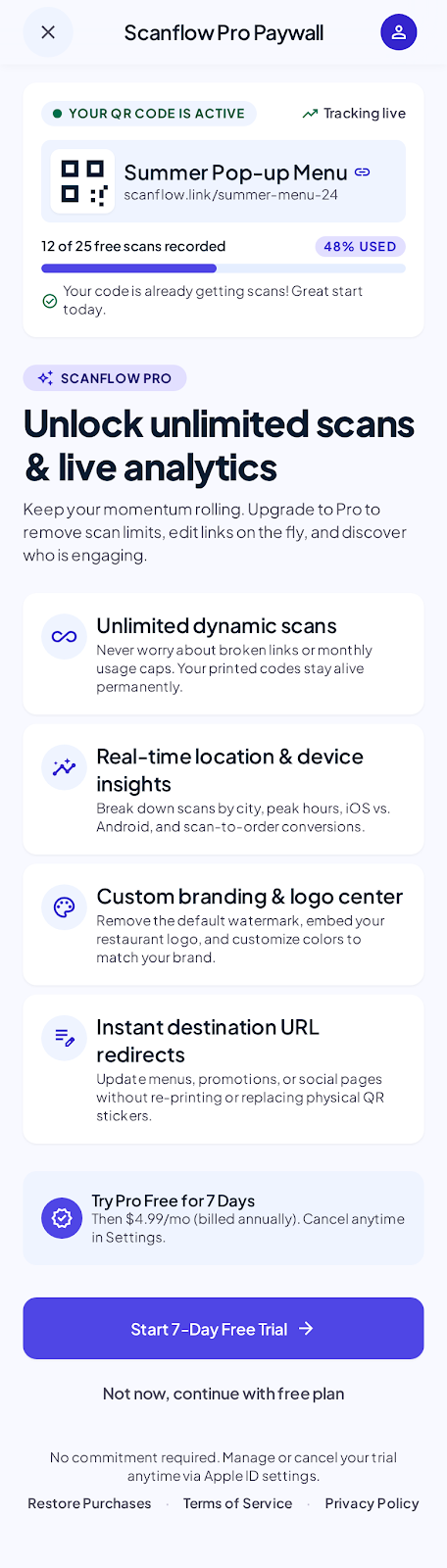
Conversion wasn't only a payment problem. People had to understand what the product did for them before they'd commit to a subscription. So we stopped treating the paywall as a single conversion point and tested it at several moments in the journey. We also tested whether the first QR code a user creates should stay permanent, and whether a lower-commitment QR pack suited people who didn't need a full subscription.
Impact
- +28% overall conversion to paid. One-off packs next to subscriptions gave people with occasional needs a way to buy.
- -25% checkout drop-off. A clearer plan comparison, local payment methods (APMs) and a simpler information hierarchy.
- +15% 6-month LTV. The first QR code used to expire after 48 hours. Making it permanent increased recurring use and later upgrades to higher-value subscriptions.
- +42% monthly-to-annual upsell. Clearer communication of plan benefits on the selection screen.
Figures come from internal Leadtech data.
Takeaways
Conversion is also a value problem.
Optimizing the payment funnel doesn't help if the user hasn't seen what the product does yet. The paywall works best at moments of real intent.
One pricing model leaves demand on the table.
One-off packs next to subscriptions reached users with different usage frequency without forcing a commitment they didn't need.
Pricing needs continuous testing.
Behavioral data, A/B tests and competitor benchmarks together were how we checked each hypothesis against what people were willing to pay.